Leave Your Message

Why Choose Smart Privacy Glass for Your Business?

Choosing Smart Privacy Glass is not merely a design decision. It can reshape how a workplace manages daylight, privacy, comfort, and energy use.

The International Energy Agency reports that buildings consume about 30% of global final energy. Their operations also create roughly 26% of energy-related emissions. Windows influence cooling demand, glare, and occupant comfort throughout the day. MarketsandMarkets estimates that the smart glass market could grow from approximately $5.8 billion in 2024 to $9.3 billion by 2029. That growth reflects stronger interest in responsive building materials.

Performance matters.

Smart Privacy Glass can change from transparent to opaque within seconds. A conference room can shift from open collaboration to confidential discussion without blinds or curtains. In a healthcare office, patients may gain privacy while natural light remains available. In a hotel lobby, glass partitions can create flexible spaces without heavy construction.

Stephen Selkowitz, a respected building-envelope expert and former Lawrence Berkeley National Laboratory leader, said, “Windows are the most dynamic part of the building envelope.” His observation explains the practical value of responsive glazing. Glass is no longer passive. It can react.

However, Smart Privacy Glass is not a universal solution. Installation costs can be significant. Electrical controls require careful commissioning. Poorly designed systems may create uneven privacy or disappointing user experiences. This is where supplier expertise, measured specifications, and post-installation testing become essential.

The better question is not whether the glass looks impressive. It is whether the system solves a real operational problem. When selected carefully, Smart Privacy Glass can support adaptable spaces, stronger privacy, and more thoughtful energy management.
Why Choose Smart Privacy Glass for Your Business?

What Is Smart Privacy Glass and How Does It Work?

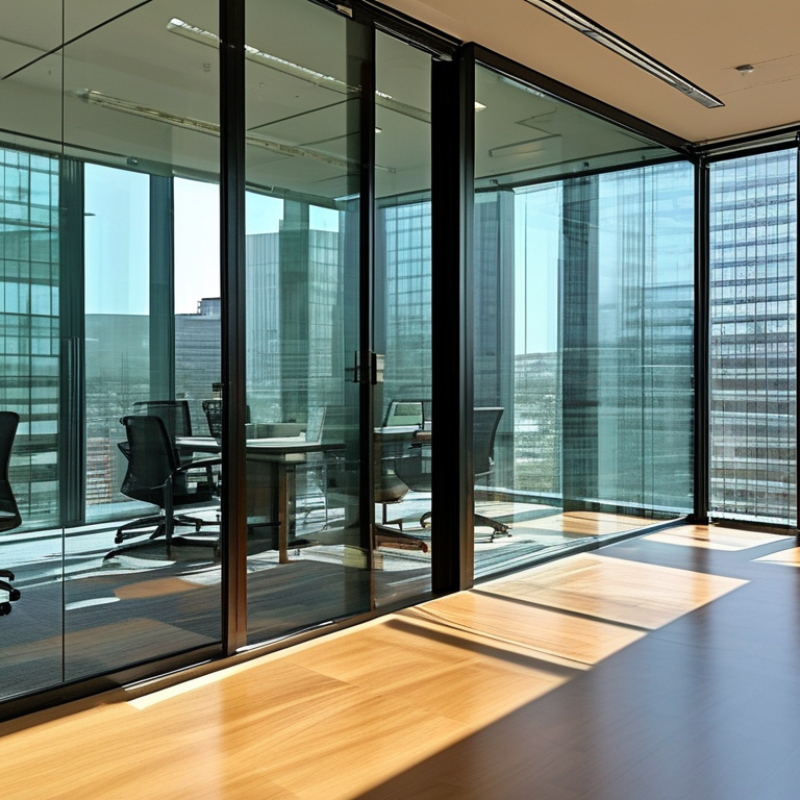
Smart privacy glass is a laminated panel that changes from clear to private when an electrical current passes through it. Inside, a liquid crystal layer sits between conductive films and protective glass. With power on, the crystals align and allow light through. When power stops, they scatter light and create a frosted appearance.

The change happens in seconds. A wall switch, remote control, motion sensor, or building management system can control the glass. In a meeting room, employees can turn a transparent partition private before discussing financial figures. In a clinic, staff can protect patient dignity without installing curtains. It also keeps natural light moving through the space, which may reduce the need for artificial lighting during the day.

Good design still requires practical judgment. The glass needs a suitable power supply, correct wiring, and professional installation. Privacy glass is not the same as a blackout blind; strong shapes or shadows may remain visible. Its privacy level can also vary with viewing angles and lighting conditions. Some projects overlook this detail.

Cleaning is simple, but abrasive products can damage the surface or electrical connections. Before choosing it, businesses should review panel size, switching frequency, emergency procedures, and long-term maintenance. It is impressive technology. It is not magic. Testing one installed sample under real office lighting can reveal problems that drawings often miss.

Key Business Benefits of Smart Privacy Glass

Why Choose Smart Privacy Glass for Your Business?

Key Business Benefits of Smart Privacy Glass

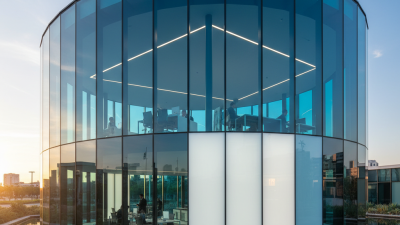
Smart privacy glass gives offices instant visual control without curtains or permanent blinds. With one switch, a clear meeting room becomes private within seconds. This supports confidential discussions and creates a more adaptable workplace. Natural light still reaches nearby desks, helping spaces feel open rather than enclosed. In busy offices, that difference can improve comfort and daily focus.

The business value extends beyond appearance. Smart glass can reduce dust collection and simplify cleaning around high-use partitions. It may also support energy management by limiting harsh sunlight during warmer hours. However, results depend on window direction, climate, control settings, and building design. It is not a magic energy solution. Our practical experience suggests that early planning prevents costly rewiring later. Reliable systems should include manual controls, clear maintenance procedures, and a safe default setting during power interruptions.

Tips: Test a full-size panel before installation. Check visibility from corridors and neighboring rooms. Ask how the glass performs after repeated switching. Review warranty coverage and electrical service requirements carefully. A small trial can reveal glare, reflection, or privacy gaps that drawings often miss. Also, train staff to use the controls properly. Simple habits matter.

Business Applications Across Different Commercial Spaces

Why Choose Smart Privacy Glass for Your Business?

Business Applications Across Different Commercial Spaces

Smart privacy glass can turn ordinary interiors into flexible, professional environments. In offices, it separates meeting rooms without blocking daylight. A clear panel becomes private during confidential discussions. This supports better space planning, especially where permanent walls feel restrictive.

Medical clinics can use it around consultation rooms and treatment areas. Staff can create visual privacy without curtains that collect dust. In hotels, switchable glass works well in bathroom partitions, guest suites, and conference areas. Retail stores may use it for fitting rooms, product displays, or staff-only zones. Educational buildings can apply it to classroom partitions and administrative offices. The effect is practical, but not magical. Wiring, controls, and suitable glass specifications still require careful planning.

Tips: Check privacy requirements before installation. Confirm the glass size, switching method, cleaning process, and emergency access with qualified professionals. Leave space for electrical components. Small planning mistakes can become expensive later. Test the glass under real lighting conditions, not only in a showroom. A bright corridor, a dark office, and evening reflections may produce different results. Some businesses also underestimate maintenance needs. Dust is easy to remove, but damaged controls or poor installation can reduce reliability. Choose measurable performance, clear warranties, and installers with documented commercial experience.

Factors to Consider Before Choosing Smart Privacy Glass

Choosing smart privacy glass requires more than admiring its instant frosted effect. Start with the building’s climate, window direction, and daily occupancy.

The International Energy Agency’s Buildings 2023 report states that buildings consume about 30% of global final energy. Glass selection can influence cooling demand, lighting comfort, and occupant satisfaction. However, performance varies sharply by installation.

Ask for verified data on visible light transmission, solar heat gain coefficient, U-value, switching speed, and power consumption.

A low solar heat gain coefficient may help west-facing offices, but it can reduce useful winter sunlight. Electrochromic and liquid-crystal systems also behave differently. One may need continuous power for its clear state. Another may switch slowly in cold conditions. Small details matter.

Check the control system before approving the glass. Can employees adjust privacy locally? Does it connect with occupancy sensors and building automation?

Request test results from recognized laboratories, not only sales claims. The U.S. Department of Energy emphasizes whole-window performance, including frames and installation quality. A poorly sealed frame can undermine expensive glazing. Real projects also reveal maintenance concerns, visible wiring, and uneven tinting. These issues are easy to overlook.

Budget for replacement components, electrician access, and cleaning procedures. Ask for a room mock-up first. A darker pane is not automatically better.

My practical concern is glare: privacy may improve while screen visibility worsens. Compare samples beside desks, under daylight, and after sunset. That small trial may prevent a costly design mistake.

Installation, Maintenance, and Long-Term Value for Businesses

Why Choose Smart Privacy Glass for Your Business?

Installation, Maintenance, and Long-Term Value for Businesses

Smart privacy glass can transform meeting rooms, medical offices, and street-facing interiors. Its clear-to-private function supports flexible space planning without heavy curtains or permanent walls. Installation requires accurate measurements, suitable electrical connections, and careful glass handling. Experienced installers should inspect the frame, wiring route, and control position before work begins. A poorly aligned panel may create visible gaps or uneven switching. Small details matter.

Maintenance is usually straightforward. Clean the surface with a soft cloth and a non-abrasive glass cleaner. Avoid sharp tools, excessive moisture near switches, and unapproved chemicals. Inspect connections during routine facility checks. In practice, no electrical system stays perfect forever. A control may fail, or a panel may respond slowly. Keeping installation records and service contacts nearby can reduce downtime. That part is often overlooked.

Tips: Test every panel before opening the space to employees. Label controls clearly. Schedule inspections with other electrical maintenance. Ask for documented warranties and expected service life. Compare energy use, replacement costs, and privacy needs over several years. The cheapest quote may not offer the lowest ownership cost. Think beyond installation day. A clear maintenance plan protects performance and helps businesses adapt rooms as needs change.

Why Choose Smart Privacy Glass for Your Business? — Installation, Maintenance, and Long-Term Value for Businesses
Business Consideration Typical Smart Privacy Glass Information Installation and Maintenance Implications Long-Term Business Value
Privacy Control Switchable glass changes between a transparent state and a translucent privacy state when electrical power is applied or removed, depending on the product design. Glass panels require correctly positioned wiring, controllers, and compatible electrical connections. Privacy performance should be checked from multiple viewing angles. Provides on-demand privacy for meeting rooms, healthcare spaces, offices, reception areas, and internal partitions without installing separate blinds or curtains.
Switching Speed Many commercially available products switch in a fraction of a second to several seconds; the exact speed depends on panel size, technology, temperature, and controller configuration. Commissioning should include repeated switching tests and confirmation that every panel responds consistently. Fast switching supports immediate privacy during meetings, consultations, presentations, and sensitive discussions.
Installation Planning Systems generally combine laminated or coated glass with transparent conductive layers, wiring, transformers or power supplies, and control equipment. Coordinate glass dimensions, edge access, cable routes, control locations, structural support, and electrical work before fabrication. New construction and retrofit projects may require different framing solutions. Early coordination reduces rework, installation delays, and the risk of visible wiring or inaccessible connections.
Electrical Consumption Power use varies by product and operating mode. Many electrically controlled privacy films or glass systems consume only a few watts per square metre while energized; the manufacturer’s technical sheet should be used for design calculations. Provide an appropriately rated power supply and avoid placing electrical components where they cannot be inspected or replaced. Low operating demand can support efficient daily use, particularly when privacy is activated only when needed.
Daylight and Solar Control Privacy glass can diffuse daylight in its privacy state, but it is not automatically a blackout product. Solar heat and glare performance depend on glass construction, coatings, orientation, and shading design. Review visible light transmission, glare, and solar heat-gain data for the specific specification. Additional shading may be needed on sun-exposed façades. Can help manage visual privacy while retaining daylight, but energy savings should be calculated for the actual building rather than assumed.
Cleaning Requirements Routine cleaning is similar to that of many architectural glass surfaces when the product is installed and sealed correctly. Use a soft, non-abrasive cloth and a mild, non-abrasive glass cleaner. Do not flood exposed edges, scratch the surface, or use abrasive pads, strong solvents, or sharp tools. Simple routine cleaning helps preserve appearance and reduces the need for specialist maintenance visits.
Maintenance Checks Key inspection points include switching consistency, visible damage, edge sealing, wiring, connectors, power supplies, and control devices. Include functional checks during planned facilities inspections. Any cracked glass, delamination, moisture ingress, or exposed electrical damage should be assessed by a qualified professional. Preventive inspection can identify faults early and reduce disruption to business operations.
Service Life Service life varies by construction, usage frequency, environmental exposure, installation quality, and electrical components. Properly specified architectural systems are commonly designed for many years of commercial use. Request documented cycle testing, warranty terms, environmental limitations, and replacement procedures before purchase. Electronic components may have different service lives from the glass panel. A durable system can spread the initial capital cost over a long operating period and reduce replacement frequency.
Safety and Building Standards Safety performance depends on the complete glass make-up, including thickness, lamination, impact resistance, fire classification, and framing system. Specify glass in accordance with applicable local building, electrical, safety, accessibility, and fire regulations. Obtain project-specific compliance documentation. Correct specification supports occupant safety, smoother approvals, and lower compliance risk.
User Experience Control options may include wall switches, remote controls, sensors, timers, or building-management-system integration, subject to system compatibility. Place controls where users can access them easily and establish clear operating instructions. Test manual override functions and power-loss behavior. Simple controls encourage consistent use and allow privacy to be managed without moving physical window coverings.
Total Cost of Ownership Upfront cost includes glass or film, fabrication, wiring, controllers, installation, testing, and possible framing modifications. Ongoing costs typically include electricity, cleaning, inspections, and component replacement. Compare complete installed quotations rather than glass-only prices. Confirm what is included in the warranty, commissioning, training, and after-sales service. Business value is strongest when the system improves space flexibility, reduces manual handling, and remains reliable throughout its planned service life.

Note: Performance figures are typical industry ranges and planning guidance, not guarantees for every product. Final specifications should be verified against project drawings, local regulations, and the selected system’s technical documentation.