China Top Partition Glass Manufacturers for Global Buyers begins with a practical question: what makes a supplier dependable?
Partition Glass now serves offices, hotels, hospitals, retail spaces, and premium homes. It separates rooms without burying daylight behind solid walls. A clear panel, slim aluminum frame, and carefully sealed joint can change how a workspace feels. However, appearance alone cannot prove quality. Acoustic performance, safety glazing, edge finishing, hardware compatibility, and installation support matter equally.
According to Grand View Research’s 2024 Construction Glass Market report, the global construction glass market reached approximately USD 118.36 billion in 2023. The report forecasts a compound annual growth rate of about 6.7% from 2024 to 2030. This expansion reflects demand for brighter, more flexible, and energy-conscious interiors. The 2024 World Green Building Trends report also highlights stronger interest in responsible material selection and building performance. These trends create opportunities for Chinese manufacturers with stable production systems and credible testing records.
Stephen Selkowitz, a former senior advisor at Lawrence Berkeley National Laboratory, has stated, “The window is the most complex component in the building envelope.” His observation also applies to interior glazing. Partition Glass must balance transparency, privacy, sound control, durability, and visual precision. That balance is easy to describe and difficult to deliver.
This guide compares leading Chinese manufacturers through product range, certifications, customization, quality control, export experience, and after-sales service. No ranking is perfect. Buyers should still verify test reports, factory capabilities, sample consistency, and installation details before signing contracts. A beautiful catalog is not enough.
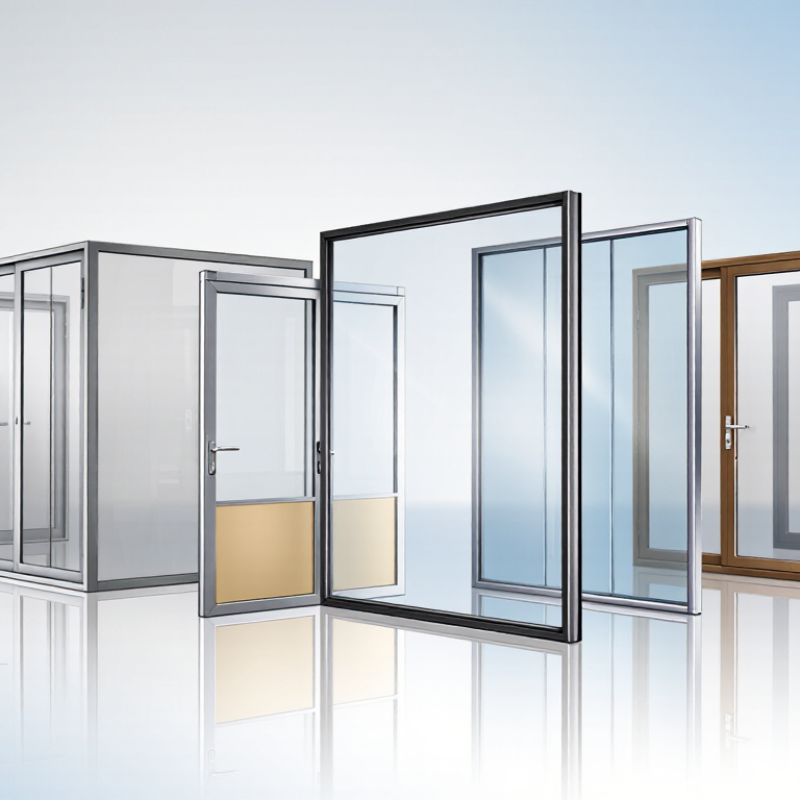
Partition glass is a safety-engineered glazing system used to divide offices, hotels, clinics, and retail interiors without blocking light. It may include tempered, laminated, acoustic, or fire-rated panels, depending on the project. Unlike ordinary windows, partition systems combine glass, frames, seals, doors, and connection hardware. The details matter.
Industry reports show why demand is growing. Grand View Research estimates the global glass partition wall market could expand at about 6% annually through 2030. The Global Alliance for Buildings and Construction reported that buildings consumed around 34% of global energy in 2022. Transparent partitions can improve daylight distribution and reduce the need for artificial lighting, although the result depends on orientation, coatings, and building controls. Glass alone is not a sustainability solution.
Global buyers often choose Chinese manufacturers for broad customization, integrated production, and competitive project pricing. Many factories can process large panels, curved glass, slim frames, and acoustic assemblies under one supply chain. Experienced buyers should request test reports, tolerances, packing specifications, and compliance evidence for standards such as EN 12150, EN 14449, or ASTM C1048. Factory audits and sample testing remain valuable. A polished catalog proves little.
The practical weakness is communication. Drawings may change after production starts. Shipping damage can also turn a low quotation into an expensive correction. Clear shop drawings, moisture-resistant packaging, and pre-shipment inspection reduce that risk. Chinese manufacturing is capable, but it is not automatically consistent. Supplier selection still requires engineering judgment, documented quality control, and honest review of site conditions.
What Partition Glass Is and Why Global Buyers Choose Chinese Manufacturers
Partition glass is commonly specified as tempered, laminated, acoustic laminated, or insulated glass for interior offices, commercial spaces, and architectural room dividers. The chart compares typical glass build-up thickness with indicative sound-insulation performance. Actual values vary according to glass composition, framing, seals, installation quality, and test standards. Chinese manufacturers are often selected by global buyers for broad customization, integrated processing capabilities, competitive production scale, and export-oriented supply support.
Evaluating partition glass manufacturers in China requires more than comparing quotations. A reliable supplier should explain glass thickness, tempering methods, acoustic options, and edge treatment clearly. Ask for production photos, factory audit records, and recent test reports. Check whether the reports match the exact glass structure you plan to purchase.
Visit the factory when possible. Observe the cutting tables, tempering furnace, inspection area, and packing process. Small details matter. Clean storage reduces surface damage. Strong corner protection lowers breakage during transport. Ask how rejected panels are recorded and replaced. Vague answers may signal weak quality control. A low price can hide inconsistent measurements.
Request a physical sample before approving mass production. Measure its thickness and inspect holes, edges, color, and flatness under daylight. Confirm tolerance requirements in writing. The manufacturer should provide export documents, packing specifications, and a realistic production schedule. Communication also reveals practical experience. Do they ask about building height, humidity, installation tools, and local codes? I have learned that a polished sample is not enough. Some suppliers perform well on samples but struggle with repeat orders, so independent inspection before shipment remains worthwhile.
For global buyers, partition glass manufacturers in China typically offer single-glazed, double-glazed, framed, and frameless systems. Single-glazed panels suit meeting rooms and open offices. Double-glazed units improve sound control and thermal performance. Sliding systems save floor space in compact interiors. Switchable privacy glass adds flexible visual control, though its electrical parts require careful planning.
Material selection affects safety, appearance, and long-term maintenance. Tempered glass provides stronger impact resistance than ordinary glass. Laminated glass holds together after breakage, which can support safer interior designs. Low-iron glass creates a clearer, less green appearance. Aluminum frames are lightweight and resist corrosion when properly finished. Steel frames can provide a stronger industrial character. Buyers should request thickness details, edge treatment, hardware specifications, and relevant test documents.
Customization may include panel height, glass tint, acoustic layers, door styles, frame colors, logos, and curved sections. Factory teams usually work from floor plans, elevations, and hardware schedules. A small drawing error can affect installation. This is easy to underestimate. Ask for physical samples, production photos, packing details, and a pre-shipment inspection plan. Review tolerances, not only the visual renderings. Some suppliers promise excellent sound reduction, but performance depends on seals, doors, ceilings, and site conditions. A complete system assessment is more reliable than judging glass alone.
China’s leading partition glass manufacturers for global buyers should demonstrate more than polished samples. Quality begins with controlled glass selection, accurate cutting, polished edges, and stable thickness. Tempered glass should meet relevant standards, such as EN 12150 or ASTM C1048, depending on the destination market. Laminated products require suitable interlayers and performance evidence under standards like EN 14449.
Certification scope matters.
An ISO 9001 certificate can indicate a managed quality system, but it does not automatically prove every glass panel is compliant. Buyers should check certificate validity, factory details, audit scope, and issuing-body accreditation. For projects using fire-rated, acoustic, or impact-resistant partitions, request complete test reports. These reports should identify glass makeup, dimensions, framing, and tested conditions. A fire-rated claim without the tested assembly is weak evidence.
Reliable manufacturers usually maintain inspection records for optical distortion, edge quality, dimensions, tempering stress, and packaging. Advanced facilities may use CNC processing, automated cutting, heat-soak testing, and barcode-based traceability. Still, equipment alone is not expertise. Experienced technicians must interpret inspection data and manage production changes.
Some suppliers present impressive factories but provide inconsistent documentation. That risk deserves attention. Ask for recent batch records, sample approvals, and a small trial order before large production. Communication also reveals capability: technical teams should explain tolerances, installation limits, and certification differences clearly. No manufacturer is perfect. Even strong systems can experience scratches, measurement errors, or transport damage, so corrective-action procedures should be reviewed before signing a contract.
China Top Partition Glass Manufacturers for Global Buyers
How to Compare Suppliers, Costs, and Export Services
Comparing partition glass suppliers requires more than checking the lowest online quotation. Request the same specification from each manufacturer, including glass thickness, dimensions, edge treatment, hardware, and surface finish. A practical request may specify 10-millimeter tempered glass, polished edges, aluminum framing, and a defined acoustic target. Ask for production drawings before approving the order. Small errors become expensive at installation.
Review technical evidence carefully. Reliable suppliers should provide test reports, quality procedures, sample photos, and clear tolerance limits. Factory videos are useful, but an independent inspection offers stronger evidence. Check whether the supplier can explain glass standards for your destination market. Experience matters here. A confident salesperson cannot replace an engineer who understands loading, packing, and site conditions.
Compare the full landed cost, not only the unit price. Include tooling, sampling, export packing, inland transport, insurance, customs documents, and destination delivery. Confirm the quotation’s Incoterm and payment schedule in writing. Ask about minimum order quantities and replacement procedures for damaged panels. Strong wooden crates, corner protection, moisture barriers, and numbered packing lists reduce delays. They also add cost.
Export service deserves a separate score. Evaluate response times, drawing control, container planning, and document accuracy. Ask for production photographs at key stages. A pre-shipment inspection can verify dimensions, glass markings, hardware quantities, and crate labels. I once underestimated installation coordination; the glass arrived correctly made but poorly matched to the site sequence. That mistake changed how I assess suppliers. Cheap is not always efficient.
| Comparison Dimension | Common Industry Specification or Benchmark | Typical Indicative Range | What Global Buyers Should Verify | Export and Purchasing Implication |
|---|---|---|---|---|
| Partition Glass Type | Tempered safety glass, laminated safety glass, double glazing, switchable glass, or fire-rated glass | Selected according to safety, acoustic, privacy, and fire-performance requirements | Confirm whether the quotation covers glass only or a complete partition system with frames, doors, seals, and hardware | Complete-system orders generally require coordinated shop drawings and more detailed export packaging |
| Glass Thickness | Single tempered glass is commonly specified at 8–12 mm; laminated constructions may use two glass plies with an interlayer | 8 mm, 10 mm, and 12 mm are frequent commercial options | Check the structural calculation, glass size, edge treatment, door loading, and local building requirements | Thickness affects weight, crate design, freight cost, hardware compatibility, and installation method |
| Glass Safety Processing | Heat-treated tempered glass is designed to break into smaller particles than ordinary annealed glass | Tempered, heat-soak-tested, laminated, or combined safety construction | Request processing tolerances, hole and cut-out confirmation, edge-finishing details, and applicable test records | All cutting, drilling, and edge work must normally be completed before tempering |
| Acoustic Performance | Acoustic performance is normally stated as an Rw or STC rating for the tested glazing or complete partition assembly | Single-glazed systems often provide lower acoustic isolation; laminated and double-glazed systems can provide higher performance | Ask for the rating of the complete wall system, including joints, doors, ceiling, and floor connections—not glass alone | Higher acoustic requirements may increase glass thickness, interlayer cost, framing complexity, and shipping weight |
| Safety and Privacy Options | Clear, ultra-clear, tinted, frosted, acid-etched, patterned, ceramic-fritted, or switchable privacy glass | Clear glass is generally the lowest-cost option; decorative and electronically controlled options cost more | Confirm visible-light transmission, color consistency, privacy level, power requirements, and sample approval procedures | Printed or electronically controlled products need additional protection against scratches, moisture, and electrical damage during transit |
| Surface and Edge Finish | Polished, flat-polished, arrissed, beveled, sandblasted, coated, or ceramic-printed edges and surfaces | Finish selection depends on visibility, touch safety, frame design, and decorative requirements | Verify edge quality, corner radius, coating durability, and whether exposed edges are acceptable for the intended installation | Detailed edge schedules reduce site rework and help the exporter prepare accurate protective packaging |
| Partition System Configuration | Frameless, slim-frame, full-height framed, double-glazed, demountable, or modular office partition | Configuration is priced by glass area, framing quantity, doors, fittings, and installation accessories | Compare the same scope: panels, mullions, transoms, doors, handles, seals, blinds, acoustic components, and fixings | System compatibility is more important than a low glass-only price when installation is outside the manufacturing country |
| Indicative Glass-Only Cost | Budgetary pricing varies by glass type, thickness, processing, size, destination, and order quantity | Approximately USD 35–120 per m² for many standard processed architectural glass options; specialty products can be higher | Request a written quotation with Incoterm, validity period, currency, minimum order quantity, and included processing | Use this as an initial benchmark only; it is not a firm market price or a complete installed-system cost |
| Indicative Complete Partition Cost | Complete systems include glass, profiles, seals, doors, hardware, packing, and sometimes installation | Approximately USD 100–300+ per m² for many commercial interior systems before local installation and taxes | Separate product cost, export packing, inland transport, ocean freight, import duty, local tax, and installation | A lower EXW price may produce a higher landed cost than a well-documented FOB or delivered quotation |
| Minimum Order and Customization | Custom panel dimensions, colors, patterns, curved glass, special coatings, and non-standard hardware may require production planning | Small sample orders may be accepted at a higher unit cost; larger repeat orders usually improve production efficiency | Confirm minimum order quantity, sample charges, tooling charges, drawing fees, and the treatment of unused materials | Consolidating compatible sizes and finishes can reduce setup cost, packing complexity, and shipping risk |
| Quality Documentation | Common documentation includes product specifications, inspection records, packing lists, commercial invoices, and test reports where applicable | Documentation should correspond to the quoted specification and destination requirements | Check whether reports are current, traceable to the product, and accepted by the project consultant or local authority | Document control supports customs clearance, project approval, replacement claims, and quality audits |
| Size and Tolerance Control | Glass dimensions and system interfaces must be coordinated with building openings and installation tolerances | Actual tolerances depend on the product, processing method, dimensions, and applicable standard | Approve final shop drawings before production and specify measurement units, datum points, hole positions, and allowable tolerances | Accurate site measurements are essential because processed architectural glass is generally difficult to modify after manufacture |
| Export Packaging | Glass is commonly separated with protective material and shipped in reinforced wooden cases or suitable export crates | Packaging requirements increase with panel size, weight, fragility, long-distance handling, and multimodal transport | Confirm crate dimensions, gross weight, lifting points, moisture protection, shock protection, and loading photographs | Packaging affects container utilization, freight charges, handling safety, and the probability of transit damage |
| Shipping Terms | Common Incoterms include EXW, FOB, CFR, CIF, and DAP, subject to contract scope and route | Freight and insurance are separate cost elements unless expressly included in the quotation | Compare quotations using the same Incoterm, destination port, insurance scope, currency, and validity period | FOB or CIF quotations can simplify comparison, while DAP requires careful review of destination charges and import responsibilities |
| Lead Time | Production time depends on glass type, processing schedule, customization, order volume, and approval cycle | Many standard projects require several weeks for production, plus international transit and customs clearance | Obtain separate dates for drawing approval, production completion, dispatch, estimated arrival, and replacement production | Allow additional time for holidays, port congestion, inspections, and potential breakage replacement |
| After-Sales and Claims | Commercial support may include installation guidance, spare hardware, replacement panels, and damage-claim procedures | Service quality depends on the written warranty, evidence requirements, response time, and replacement terms | Clarify inspection deadlines, required photographs, packaging retention, warranty exclusions, and responsibility for site labor | A clear claims process reduces disputes when damage or dimensional issues are discovered after delivery |
Note: Cost figures are indicative budgeting benchmarks for comparison purposes only. Actual prices depend on specification, quantity, processing, packaging, Incoterms, destination, taxes, freight rates, and project conditions. Buyers should obtain a detailed, project-specific quotation before placing an order.