Leave Your Message

How to Choose a Curved Glass Guard in 2026?

Choosing a Curved Glass Guard in 2026 requires more than comparing photographs and prices. The right system must balance safety, appearance, structure, installation, and long-term maintenance. Start with the guard’s location, height, curve radius, expected traffic, and exposure to weather. A balcony beside the sea faces different demands than an indoor staircase. Small details matter.

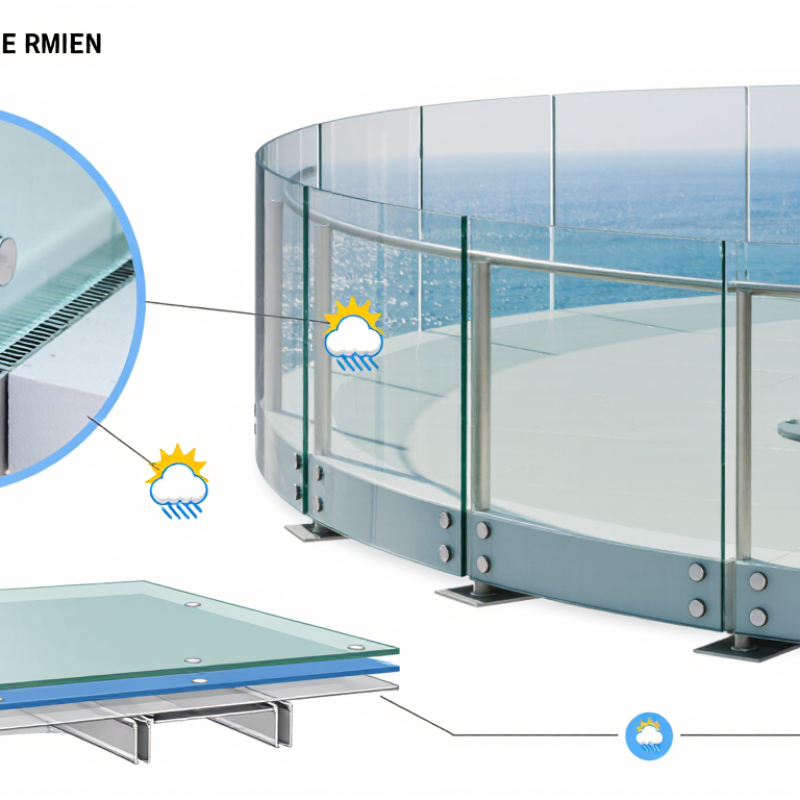
Glass selection deserves careful attention. Laminated safety glass can help retain fragments after breakage, while heat-treated glass may provide strength and clean visual lines. However, the best option depends on the complete system, not the glass alone. Check thickness, edge quality, fixing points, handrail connections, and drainage areas. Ask suppliers for test reports, material certificates, installation instructions, and clear warranty terms. Reliable documentation is useful.

Do not ignore the structure behind the glass.

Posts, channels, base shoes, anchors, and supporting slabs must work together. A qualified engineer should verify loads, deflection, wind exposure, and local building requirements before approval. Experienced installers can also identify practical problems, such as tight curves, uneven floors, or difficult access for replacement panels. These issues are easy to miss in a showroom.

A polished design can still be poorly engineered. That is worth remembering. The selection process may also change after a site survey, and that is not necessarily a failure. In this guide, you will learn how to compare curved glass profiles, choose dependable hardware, review supplier evidence, and avoid expensive assumptions before ordering.
How to Choose a Curved Glass Guard in 2026?

Curved Glass Guards: Purpose, Types, and Common Applications

How to Choose a Curved Glass Guard in 2026?

Curved Glass Guards: Purpose, Types, and Common Applications

A curved glass guard protects people while preserving open views, daylight, and visual space. It commonly appears on balconies, staircases, ramps, terraces, atriums, and pool edges. The World Health Organization reported about 684,000 fatal falls worldwide each year in its 2021 global injury data. This figure is not specific to glass guards, but it reinforces the value of well-designed edge protection.

The main types include framed systems, frameless base-fixed systems, and handrail-supported designs. Laminated safety glass is often preferred because its interlayer can retain fragments after breakage. Tempered glass may offer strength, but it requires careful engineering and compatible fixing details. Curvature also matters. Tight bends can increase optical distortion, edge stress, and fabrication cost. Curves magnify mistakes. Check the radius, glass thickness, wind load, fixing depth, drainage, and handrail height before ordering.

In practice, a graceful curve can still be a poor choice if cleaning access is limited. The International Energy Agency’s Buildings 2024 report states that buildings consume about 30% of global final energy. Daylight-friendly guards may support broader efficiency goals, although their direct energy impact is usually modest. Specify tested glazing, polished edges, corrosion-resistant fittings, and documented installation procedures. Do not rely on appearance alone. Local building requirements differ, and a qualified engineer should verify the final assembly. Fancy geometry is not automatically better.
How to Choose a Curved Glass Guard in 2026?

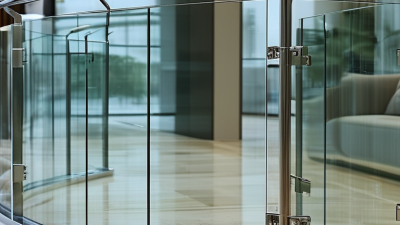
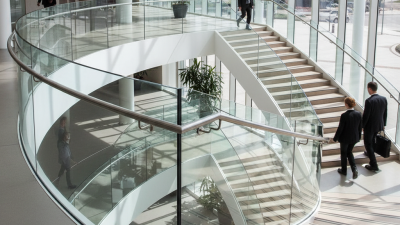
Curved glass guards combine fall protection with uninterrupted views. Guard height, glass safety, structural support, edge protection, and the installation environment should be checked against the applicable local building code.

Reference guard heights commonly specified in selected building regulations: U.S. IRC residential applications 914 mm, U.S. IBC general applications 1067 mm, Australia 1000 mm, and the United Kingdom 1100 mm. Requirements can vary by building type, occupancy, location, and local amendments.

Key Safety Standards and Performance Requirements in 2026

How to Choose a Curved Glass Guard in 2026?

Safety begins with the glass specification, not the curve. The U.S. National Safety Council’s Injury Facts 2024 reported 46,653 preventable fall deaths in 2022. A guard must resist impact, crowd pressure, and daily misuse. Under the International Building Code, many guards require a 200-pound concentrated load and a 50-pound-per-linear-foot load. Local authorities may apply different values.

For curved panels, choose laminated safety glass with an interlayer that holds fragments after breakage. Heat-strengthened or fully tempered glass may improve impact performance, but tempering alone does not prevent every falling hazard. ASTM E1300 helps engineers assess glazing strength, while ASTM E2358 addresses structural glass railing performance. European projects should also review EN 12600 impact classification and EN 14449 requirements for laminated glass. These standards are useful, but they do not replace project-specific engineering.

On site, I check the edge finish, fixing points, and deflection before approving a guard. Curved geometry can create uneven stress near holes, clamps, and tight-radius bends. A small alignment error matters. Handrails should remain continuous, comfortable, and securely connected. Water drainage also deserves attention because trapped moisture can weaken fittings over time. Testing is often treated as paperwork. That is a mistake. Real installation conditions may expose weaknesses that drawings miss.

Source references: International Building Code 2024, ASTM E1300, ASTM E2358, EN 12600, EN 14449, and National Safety Council Injury Facts 2024.

How to Assess Glass Shape, Thickness, and Edge Quality

How to Choose a Curved Glass Guard in 2026?

When assessing a curved glass guard, start with the shape, not the appearance. Measure the radius, arc length, height, and fixing points from approved drawings. A small radius creates higher forming stress and may increase optical distortion. Ask for a full-size sample, because a small curved coupon can hide waviness. I have seen elegant samples look uneven after installation. That mistake is expensive.

Thickness must match the support system and expected loads. The 2024 International Building Code commonly uses a 50-pound-per-linear-foot guard load and a 200-pound concentrated load for guards. These figures are not a substitute for engineering. ASTM E1300-16a(2021) supports glass-load calculations, while ASTM E2358 addresses permanent glass railing performance. Compare the proposed glass build-up with those requirements. Laminated safety glass is often preferred because its interlayer can retain fragments after breakage. Thicker is not automatically safer.

Edge quality deserves close inspection. Run a clean cloth along the edge; it should not catch on chips, shells, or sharp transitions. Check polished edges under bright side lighting, especially near drilled holes and tight curves. Industry guidance from the National Glass Association stresses controlled fabrication and careful handling, but site conditions can still damage finished edges. Request inspection records, dimensional tolerances, and test evidence. I would also verify the actual radius after delivery. Drawings can be perfect; fabrication sometimes is not.

Choosing Frames, Mounting Systems, and Protective Features

How to Choose a Curved Glass Guard in 2026?

Choosing the frame, mounting system, and protective features requires more than visual appeal. Grand View Research’s 2024 glass railing market analysis projects a 6.6% compound annual growth rate through 2030. This growth reflects stronger demand for open, light-filled interiors. However, a curved guard still needs structural engineering. Select laminated tempered glass with a suitable interlayer. It can retain fragments after breakage. Ask for verified load, impact, and deflection data. Local building requirements remain essential.

Frame selection changes the guard’s character and performance. A slim metal frame offers continuous support and hides fewer sightlines. Frameless systems look cleaner, but their base channels need accurate leveling. Side-mounted brackets may preserve floor space. Top-mounted channels can simplify alignment. The mounting surface must resist movement, moisture, and repeated cleaning. A 2024 report from the National Glass Association highlights fabrication accuracy and installation quality as major reliability factors. I would not trust a beautiful sample alone. Curved glass is unforgiving.

Tips: Check the radius before ordering. Confirm the glass thickness, interlayer, edge finish, and tested hardware. Add drainage paths beneath the base channel. Use resilient gaskets to reduce vibration. Specify rounded edges near walking routes. Request installation drawings, inspection records, and maintenance instructions. Small gaps matter. A missed detail can become an expensive weakness.

How to Choose a Curved Glass Guard in 2026? - Choosing Frames, Mounting Systems, and Protective Features

Decision Area Option Key Characteristics Best-Suited Applications Selection Notes
Frame Type Frameless glass Uses hidden channels, base shoes, or point-fixed fittings to maximize transparency. Modern staircases, balconies, terraces, and interior feature guards. Requires accurate curved-glass fabrication and carefully engineered support spacing.
Post-and-rail frame Vertical posts and a top rail provide visible structure and a continuous graspable edge. Public areas, ramps, balconies, and locations requiring a defined handrail. Confirm post spacing, rail height, edge clearances, and structural anchorage against local code.
Continuous metal frame Top, bottom, or side rails follow the curve and protect the glass perimeter. High-traffic interiors, commercial spaces, and installations needing edge protection. Allow for thermal movement, drainage, cleaning access, and compatibility between metals and glass.
Mounting System Base shoe / channel A continuous or segmented channel supports the lower glass edge with setting blocks and approved gaskets. Balconies, floor-level guards, and long curved runs. Check channel drainage, glass bite, anchor capacity, and whether the channel can follow the required radius.
Post-mounted clamps Discrete clamps attach glass panels to posts without requiring a continuous bottom channel. Retrofit work, segmented curves, and designs with visible vertical supports. Use compatible liners or gaskets; never allow bare metal to contact the glass directly.
Point-fixed fittings Bolts, standoffs, or fittings transfer loads through engineered holes or edge connections. Feature staircases, observation areas, and highly transparent architectural guards. Requires factory-drilled holes, verified edge distances, and detailed structural calculations.
Side-mounted brackets Fixes the guard to the vertical face of a slab, stair stringer, or supporting structure. Narrow balconies, stairs, and installations where floor space must remain clear. Verify substrate thickness, reinforcing steel location, waterproofing, and bracket corrosion resistance.
Glass Construction Heat-strengthened laminated glass Combines heat-strengthened plies with an interlayer; the interlayer helps retain fragments after breakage. Curved guards where post-breakage retention and reduced thermal-stress sensitivity are important. The glass make-up, interlayer, support conditions, and thickness must be specified by an engineer.
Fully tempered laminated glass Provides high impact resistance and laminated post-breakage retention, subject to the selected interlayer and design. Residential and commercial guards with demanding impact or safety requirements. Account for possible nickel sulfide inclusions and confirm whether heat-soak testing is required by the project specification.
Monolithic tempered glass A single heat-treated pane; it breaks into small particles but does not provide laminated fragment retention. Limited applications where local regulations and the complete guard design permit it. Do not treat tempered glass alone as a substitute for laminated safety glass where retention is required.
Protective Features Laminated safety interlayer Holds glass fragments together after fracture and can improve acoustic and UV-control performance depending on formulation. Balconies, stairs, public circulation areas, and elevated locations. Select an interlayer suitable for moisture exposure, temperature range, color requirements, and guard retention needs.
Rounded and polished edges Reduces sharp-edge exposure and improves handling and cleaning safety. Handrail-level edges, exposed panel edges, and high-contact areas. Specify edge finish before tempering or lamination because later cutting or drilling is generally not permitted.
Gaskets and isolation pads Elastomeric components separate glass from metal and accommodate limited movement. All framed or clamped curved-glass guard systems. Use materials compatible with the glass interlayer, sealants, cleaning chemicals, and outdoor exposure.
Top handrail Provides a continuous graspable element and protects the upper glass edge. Stairs, ramps, accessible routes, and high-traffic areas. Confirm required height, continuity, return details, clearance, and load resistance under the applicable building code.
Project Conditions Tight radius Requires glass and frame components manufactured for a small, accurately defined curve. Compact stair wells, curved landings, and feature partitions. Provide the inside radius, outside radius, arc length, rise, and panel segmentation before fabrication.
Outdoor or coastal exposure Introduces moisture, salt, wind, temperature variation, and drainage requirements. Seafront balconies, rooftops, terraces, and exposed external stairs. Choose corrosion-resistant components, isolate dissimilar metals, avoid trapped water, and schedule inspections.
High pedestrian traffic Increases the importance of impact resistance, continuous handrails, edge protection, and robust anchorage. Shopping areas, offices, hotels, transit facilities, and schools. Use a code-compliant engineered system rather than selecting glass thickness from appearance alone.
Easy maintenance requirement Favors accessible drainage paths, replaceable gaskets, fewer dirt traps, and reachable fasteners. Restaurants, public buildings, rental properties, and busy residential developments. Provide cleaning access and a documented inspection plan for glass, fittings, seals, and anchors.
Final Verification Before ordering, verify the applicable building and guard regulations, design loads, glass safety classification, curved-glass tolerances, support spacing, anchor capacity, handrail requirements, drainage, edge clearances, and installation procedure with a qualified structural professional.

Note: Final glass make-up, dimensions, fixings, and mounting details must be engineered for the project location and verified against the applicable 2026 local building codes and standards.

Comparing Costs, Maintenance Needs, and Long-Term Value

How to Choose a Curved Glass Guard in 2026?

Curved glass guards usually cost more than straight systems. Custom templates, curved panels, specialist transport, and slower installation increase the initial bill. The 2025 RSMeans Building Construction Cost Data treats custom glazing, metal fittings, and access equipment as separate cost items. This matters because one attractive quotation may hide several allowances. Request itemized pricing for glass, engineering, delivery, installation, and future replacement.

Maintenance affects the real value.

Specify laminated safety glass, corrosion-resistant fittings, and accessible drainage points. Clean panels with a soft cloth and neutral detergent. Avoid abrasive pads, especially near exposed edges. During site inspections, check loose fasteners, damaged seals, chips, and water marks. Quarterly checks suit busy public areas, although harsh coastal conditions may require more frequent attention. Small defects are cheaper to repair early. That sounds obvious, but it is often missed.

Long-term value is not only visual.

The World Green Building Council’s 2023 guidance reports that operational costs can represent about 80–90% of a building’s lifetime cost. A durable guard can reduce cleaning difficulty, call-outs, replacement work, and disruption. However, premium glass is not automatically better value. Confirm panel availability, repair procedures, warranty limits, and local installer capability. A 20% cheaper option may become expensive after one damaged panel. I would not trust a beautiful curve without a maintenance plan.