Leave Your Message

2026 Top Intelligent Glass Types for Global Buyers?

Global buyers are entering a market where glass can do more than transmit daylight. Intelligent Glass can switch from clear to private, reduce solar heat, or adjust its tint automatically. These functions support offices, hospitals, hotels, vehicles, and high-end homes. Yet product names often sound similar. Performance can differ sharply between suppliers.

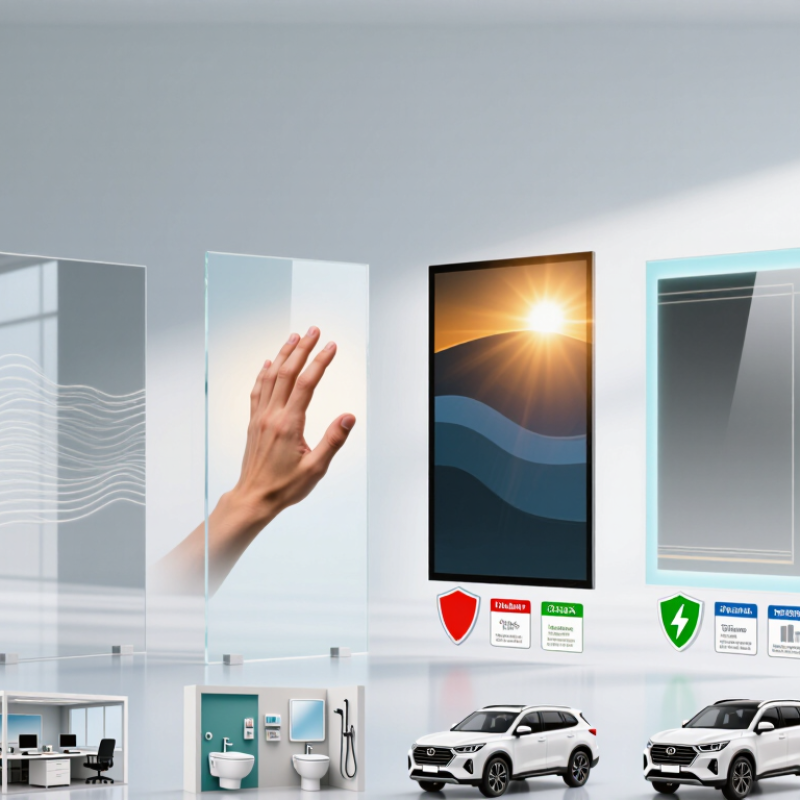
This guide examines leading Intelligent Glass types expected to attract global attention in 2026. Electrochromic glass gradually changes tint through electrical control. PDLC glass switches between transparent and opaque states. Thermochromic and photochromic options respond to temperature or sunlight. Low-emissivity smart coatings can improve insulation without dramatic visual changes. Each technology has a different purpose, cost structure, and installation requirement.

Real projects reveal the important details. A south-facing façade may need strong solar control during a bright afternoon. A bathroom partition may require fast privacy switching and reliable moisture protection. Buyers should check visible light transmission, switching speed, power demand, color stability, warranty terms, and replacement procedures. Local climate matters. So do voltage standards, fire ratings, safety certifications, and available installers.

No single glass type fits every building. That is easy to forget. Supplier claims also deserve careful testing. Independent laboratory data, project references, and sample panels provide stronger evidence than attractive brochures. This overview offers a practical starting point for architects, developers, distributors, and procurement teams. It also recognizes an uncomfortable reality: newer technology may deliver impressive control, but long-term maintenance records remain uneven in some markets. Careful comparison is essential before committing to large orders.
2026 Top Intelligent Glass Types for Global Buyers?

What Is Intelligent Glass and How Does It Work?

Intelligent glass is a glazing system that changes its light transmission, tint, or privacy level. It responds to electricity, heat, sunlight, or user commands. Electrochromic glass uses a low-voltage current to move ions between thin layers. The glass darkens gradually, then returns to a clearer state. Polymer-dispersed liquid crystal glass switches quickly between transparent and opaque modes. Thermochromic glass reacts to temperature instead.

The energy case is increasingly important.

The International Energy Agency reported that buildings consumed about 30% of global energy and produced 26% of energy-related emissions in 2022. Dynamic glazing can reduce solar heat gain, glare, and cooling demand. The U.S. Department of Energy notes that advanced window controls may lower building energy use in suitable climates, although results depend on orientation, shading, and control settings. Numbers vary.

For global buyers, the working details matter more than a glossy specification sheet.

A south-facing office window may tint at noon, keeping desks cooler and screens readable. A conference room may turn opaque during a private meeting.

Sensors, wiring, switching speed, visible transmittance, and failure behavior should be tested together.

The National Renewable Energy Laboratory has highlighted controls and daylight management as key factors in dynamic-window performance. Installation quality remains critical.

Even excellent glass performs poorly when sensors are misplaced or seals fail.

The industry still needs better long-term field data. Real buildings are messier.
Top Intelligent Glass Types Available to Global Buyers in 2026

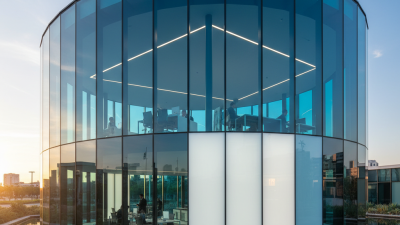
In 2026, global buyers can choose from several intelligent glass types for offices, hotels, healthcare spaces, and homes. Electrochromic glass changes tint gradually through an electrical signal. It reduces glare and solar heat while preserving outdoor views. It suits façades, skylights, and meeting rooms with strong daylight exposure.

PDLC switchable glass changes from clear to opaque within seconds. It supports privacy in bathrooms, clinics, conference rooms, and interior partitions. However, it usually needs continuous power to remain transparent.

Suspended particle device glass offers faster shading control and stronger visual contrast. It may fit premium façades, vehicle interiors, and display areas.

Thermochromic glass reacts to heat instead of manual commands. Its operation is simple, but users cannot control every change precisely.

Real purchasing decisions depend on more than appearance. Buyers should compare visible light transmission, solar heat gain, switching speed, power use, glass size, and replacement access. Ask for tested performance data, not only showroom samples. A small sample may look impressive under controlled lighting. Real buildings behave differently. Wiring routes, local climate, frame design, and cleaning methods can affect long-term results. Some projects also require region-specific safety and energy documentation.

The choice is rarely perfect. A dark façade may reduce cooling loads but limit natural light. A privacy partition may improve comfort but create maintenance concerns.

I would request a pilot installation before approving a large order. Measure glare, temperature, response time, and user satisfaction for several weeks. Small practical tests often reveal weaknesses that polished specifications miss.

How Intelligent Glass Types Differ in Performance and Control

Electrochromic, PDLC, SPD, and thermochromic glass do not deliver the same performance. Electrochromic glass changes tint gradually, often within several minutes, reducing glare and solar heat. It usually supports low-voltage automated control. PDLC switches from transparent to opaque in milliseconds, making it useful for privacy partitions. However, it does not provide strong solar control when clear. SPD glass offers variable shading and better daylight comfort, but its control system can require continuous power. Thermochromic glass reacts to heat without wiring. Convenient, but less predictable.

Control is decisive. The U.S. Department of Energy reports that dynamic windows can reduce peak cooling demand by up to 20% in suitable buildings. Lawrence Berkeley National Laboratory studies also show that automated shading performance depends heavily on climate, façade orientation, and control logic. A south-facing office may benefit greatly. A shaded northern façade may gain little. Grand View Research valued the global smart glass market at about USD 5.5 billion in 2023, with strong growth projected through 2030. That growth should not hide specification risks. Glass response time, visible transmittance, switching uniformity, wiring access, and emergency override need practical testing. A beautiful sample can still perform poorly beside a bright window. Cost remains another weakness. The most advanced option is not always the most intelligent choice.

2026 Top Intelligent Glass Types for Global Buyers? - How Intelligent Glass Types Differ in Performance and Control

Intelligent Glass Type Operating Principle Typical Visible Light Transmission Typical Switching Time Control Method Electrical Demand Performance Profile and Recommended Applications
Electrochromic Glass
Best for dynamic daylight and solar control
A low-voltage electrical charge moves ions between electrochromic layers, gradually changing the glass tint. Approximately 1%–60%, depending on glass construction and tint level. Usually about 3–20 minutes for a full transition; large panes, low temperatures and darker states can take longer. Manual wall control, low-voltage controller, daylight sensor, occupancy sensor or building-management-system integration. Uses power mainly during the transition. Many products require little or no power to hold a selected tint. Provides strong glare reduction, daylight modulation and solar-heat control. Suitable for façades, skylights, offices, hospitals and transport interiors. The main limitation is slower switching compared with privacy glass.
Suspended Particle Device (SPD)
Best for fast solar and glare management
Electrically aligned suspended particles allow more light to pass; when unpowered or tinted, the particles block and absorb more light. Approximately 1%–60%, with continuous intermediate tint levels available in many systems. Commonly about 1–3 seconds, depending on pane size, temperature and control system. Wall switch, remote control, automatic daylight sensor, façade controller or building-management-system integration. Typically requires continuous power to maintain the clear state; exact consumption depends on pane size, voltage and controller design. Offers rapid glare reduction and good solar-control capability while maintaining a view in intermediate states. Suitable for vehicle glazing, premium façades, skylights and large transparent areas. Clear-state energy demand and higher system complexity should be evaluated.
Polymer-Dispersed Liquid Crystal (PDLC)
Best for instant privacy
Liquid-crystal droplets align under an electrical field to create a transparent state; without power, the droplets scatter light and create a privacy appearance. Clear state commonly about 70%–85%; powered-off privacy state is usually below 5% transparent transmission but remains light-transmitting and translucent. Typically less than 1 second, often in the millisecond-to-subsecond range. Wall switch, remote control, dimmer-compatible controller, occupancy sensor or smart-building control. Usually requires continuous power to remain clear; the exact load varies with film area and controller specification. Provides fast visual privacy but is not primarily a solar-heat-control product. Best for meeting rooms, healthcare spaces, bathrooms, internal partitions, doors and laminated privacy windows. A translucent white appearance remains when opaque.
Thermochromic Glass
Best for passive heat-responsive façades
A thermochromic coating changes its optical properties as the glass temperature rises, usually darkening under stronger solar heating. Commonly varies within approximately 10%–60%, depending on coating, temperature and solar intensity. Passive and gradual; the response generally occurs over several minutes as the glass heats or cools. No electrical control is normally required. Performance is influenced by outdoor temperature, solar radiation, orientation and ventilation. No operating electricity for switching or holding the state. Can reduce solar heat gain without wiring or user intervention. Suitable for energy-conscious façades and windows where automatic operation is preferred. Tint level cannot normally be selected directly by occupants, and winter or cloudy-day response is limited.
Photochromic Glass
Best for UV-responsive automatic tinting
Photochromic materials darken when exposed to ultraviolet radiation and fade when UV intensity decreases. Often approximately 20%–70%, depending on product formulation, temperature and UV exposure. Usually several minutes to darken and longer to return toward the clear state; temperature affects the response. Passive UV response; direct electrical or software control is generally unavailable. No operating electricity. Automatically reduces glare and UV transmission in response to sunlight. Useful for selected daylighting and specialty-glazing applications. It is less predictable behind some low-emissivity coatings or laminated constructions and is not ideal when precise occupant control is required.
Micro-Blind Glass
Best for electronically adjustable shading
Microscopic electrically actuated blinds or shutters within a glazing or film layer rotate or change orientation to control transmitted light. Commonly adjustable from approximately 5%–70%, depending on blind geometry and glazing assembly. Typically seconds to tens of seconds, depending on the actuator and pane dimensions. Manual switch, programmable controller, daylight sensor, façade automation or building-management-system integration. Depends on the actuator design; power may be needed during movement and, for some designs, to maintain a position. Can provide directional shading and daylight control while preserving a more structured appearance than uniform tinting. Suitable for façades, skylights and specialized architectural glazing. Availability, maximum pane size and long-term qualification vary by supplier and project.
Data note: Performance figures are representative industry ranges for 2026 planning and comparison. Actual visible transmission, solar heat-gain coefficient, switching speed, power consumption and durability depend on glass thickness, coating design, laminated construction, pane size, ambient temperature, wiring and control equipment. Manufacturer-certified project data should be used for final specification.

Best Applications for Each Intelligent Glass Category

2026 Top Intelligent Glass Types for Global Buyers: Best Applications for Each Intelligent Glass Category

Electrochromic glass suits office façades, hotel rooms, and sun-facing meeting spaces. It changes tint gradually, reducing glare and cooling demand. I have found it most effective where daylight matters throughout the day. Its control system needs careful commissioning. Otherwise, users may complain about uneven tinting or slow response.

PDLC glass works best for instant privacy. Use it in conference rooms, clinic partitions, bathroom windows, and residential interiors. Clear and opaque modes switch within seconds. However, PDLC needs continuous electrical power to remain transparent. That detail is often missed during energy planning.

SPD glass offers stronger glare control for skylights, vehicle glazing, and large panoramic windows. It handles bright sunlight well, but its darker appearance may affect interior color perception.

Thermochromic glass fits spaces needing passive solar regulation, such as conservatories, atriums, and low-maintenance façades. It responds to heat without complex controls. Its performance can be less predictable during rapidly changing weather.

Photochromic glass may suit smaller openings, sunrooms, and specialty interior features where gradual tinting is acceptable. It is not always ideal for large commercial façades.

Global buyers should check glass thickness, laminated safety requirements, climate data, control compatibility, and replacement access. A beautiful specification can still fail when installers cannot service the control hardware locally.

Key Buying Factors for International Glass Projects

2026 Top Intelligent Glass Types for Global Buyers

International buyers should match intelligent glass with the building’s climate, use, and control needs. Electrochromic glass suits façades needing gradual solar and glare control. PDLC glass changes quickly between transparent and private states. Thermochromic glass responds to heat, but its performance may be less predictable in mixed weather. For offices, hospitals, hotels, and homes, confirm visible light transmission, solar heat gain, switching speed, and power use. A clear specification prevents expensive replacements later.

Tips: Request laboratory data, full-size samples, wiring diagrams, and installation instructions. Check glass thickness, edge protection, insulation value, and compatibility with frames. Ask whether local technicians can repair controllers and replace damaged panels. Confirm testing for wind load, humidity, temperature cycles, and impact resistance. International projects also need careful packaging, shipping insurance, customs documents, and realistic lead times.

Budget is only one buying factor. Lifecycle cost matters more when large façades operate every day. Review warranty limits, control-system access, cleaning requirements, and expected service life. A perfect specification rarely exists. I have seen projects prioritize instant switching, then discover that glare control was more important. Buyers should involve architects, façade engineers, electricians, and facility teams before ordering. Standards vary by market, so verify local certification requirements with qualified professionals. A small pilot installation can expose color shifts, control delays, or uncomfortable reflections before full production.