Leave Your Message
Choosing among the best types of Curved Glass Coffee Tables in 2026 requires more than admiring a smooth silhouette. A well-designed table must balance safety, proportion, durability, and everyday comfort. This guide explores popular forms, including round, oval, kidney-shaped, nesting, and sculptural pedestal designs. Each option creates a different visual rhythm in a living room. A round table can soften angular sofas, while an oval model may improve movement through narrow spaces. Measure the seating area carefully before shopping. Leave enough clearance for walking, cleaning, and opening nearby drawers.
Material quality also deserves close attention. Tempered glass can provide better impact resistance than ordinary glass, although no tabletop is completely damage-proof. Look for stable bases, polished edges, reliable hardware, and clear product specifications. A low center of gravity often improves stability, especially in homes with children or active pets. We also consider maintenance, since fingerprints and dust appear quickly on transparent surfaces. A soft microfiber cloth usually works better than abrasive cleaners. Small details matter.
The most attractive shape is not always the most practical choice. I have seen elegant tables overwhelm compact rooms or leave awkward gaps beside large sofas. That judgment can be subjective. Therefore, the comparisons focus on measurable features, realistic room layouts, and long-term use. Readers should still verify dimensions, weight limits, warranty terms, and local safety guidance before purchasing. Trends may change, but dependable construction remains valuable. This overview aims to make the decision clearer, while acknowledging that personal habits and imperfect spaces influence the final choice.
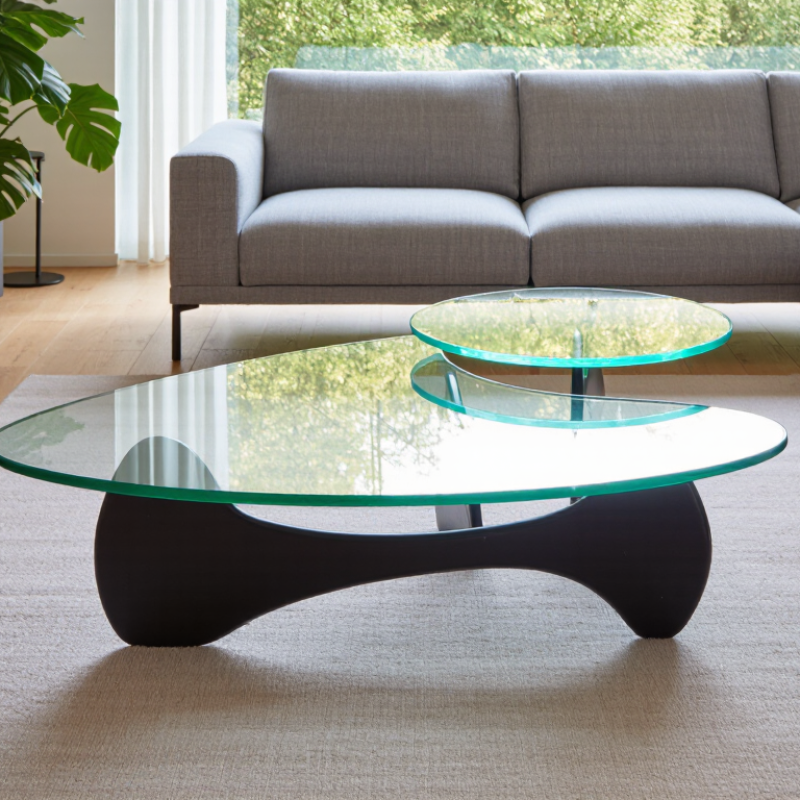
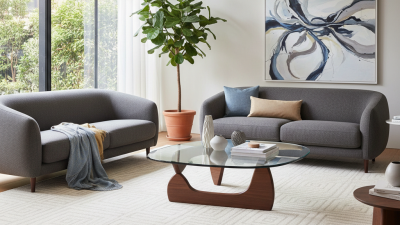
A curved glass coffee table is defined by more than a rounded tabletop. Its identity comes from softened geometry, transparent surfaces, and a base designed to support that visual lightness. The curve may appear in a circular top, an oval silhouette, or gently bent edges. Each form changes movement around the sofa. Oval tables often suit narrow rooms, while round tables create a more central gathering point.
Material choice matters. Heat-treated glass offers stronger resistance to everyday impact than ordinary glass, although it is not indestructible. Laminated glass can hold together more securely if damaged. Look for polished edges, stable joints, and a base that does not wobble on a level floor. A low table should also leave comfortable knee space and avoid sharp contact points near walking paths.
In practical use, fingerprints show quickly. A soft microfiber cloth and diluted glass cleaner usually work well. Avoid dragging ceramic bowls across the surface. I have seen tables look elegant in photographs but feel awkward beside deep sofas because their curves were too wide. That detail is easy to miss. A good design balances transparency with usable height, reachable corners, and enough clearance for daily movement. Even a beautiful curve can become inconvenient when the room is already crowded.
| Type | What Defines It | Typical Form and Approximate Size | Common Construction | Practical Considerations | Best Suited To |
|---|---|---|---|---|---|
| Rounded-Edge Glass Top | A flat glass surface with smoothly rounded corners or a curved perimeter. The glass itself is not necessarily bent into a three-dimensional shape. | Often rectangular, oval, or circular; approximately 80–120 cm long and 40–65 cm high, depending on the design. | Tempered glass top resting on a separate metal, wood, or stone base. | Rounded edges soften the outline, while the separate base allows a wide range of styles. Check that the top is securely supported and that exposed edges are finished. | Living rooms where a conventional table footprint is useful but sharp-looking corners are not desired. |
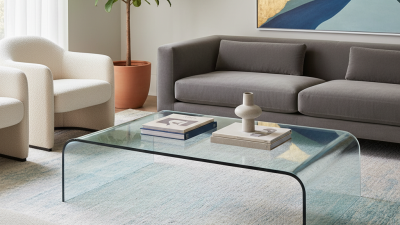
| Curved or Bent-Glass Form | Glass is shaped into a continuous curve, sometimes forming the top and sides as one flowing piece. | Commonly a compact rectangular or waterfall-like form; size varies considerably by construction. | Formed glass, often tempered or otherwise processed for furniture use; some designs combine multiple glass pieces. | The continuous profile can reduce visible joints, but the table may be heavy and can be harder to move. Confirm the maker’s care and load guidance. | Minimalist interiors and smaller rooms where a visually open silhouette is preferred. |
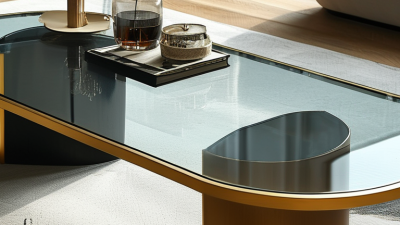
| Oval Glass Coffee Table | An elongated tabletop with a continuously rounded outline and no pointed corners. | Often about 90–130 cm long, 45–70 cm wide, and 35–45 cm high; actual dimensions vary. | Tempered glass top on a central pedestal, paired supports, or a frame. | The oval shape can make circulation around the table easier than a similarly sized rectangular top, but it still needs adequate clearance from seating. | Long seating arrangements, family rooms, and walkways where corner clearance matters. |
| Round Glass Coffee Table | A circular glass top, which may have a curved edge or sit above a sculptural curved base. | Commonly around 60–100 cm in diameter and 35–45 cm high. | Tempered glass top with a single pedestal, tripod, or multi-leg base. | A round top has no corners and works well in compact seating groups. Check base stability, particularly on uneven floors. | Small living areas, conversation spaces, and seating arranged around a central point. |
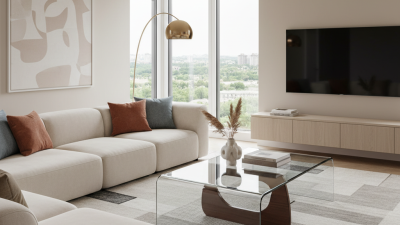
| Organic or Freeform Glass Top | An asymmetrical tabletop with flowing curves rather than a standard circle, oval, or rectangle. | Dimensions are design-specific; measure the widest and longest points before purchase. | Usually a shaped glass top supported by a separate base or several discreet supports. | The irregular outline creates a distinctive profile, but can make it less straightforward to position trays or align with a sofa. Verify that all support points are stable. | Rooms that benefit from a sculptural focal point or a less formal furniture arrangement. |
| Glass-Tier or Shelf Table | A curved or rounded glass upper surface combined with a lower glass shelf for additional storage. | Often around 80–120 cm long, with the overall height commonly in the 35–45 cm range. | Two glass panels held apart by a metal or wood frame, posts, or supports. | The lower shelf adds space for books or remotes, but creates more surfaces to clean. Do not exceed the stated load limits for either level. | Living rooms needing a display or storage surface while retaining a light, open appearance. |
Note: Dimensions shown are approximate examples of common coffee-table proportions, not fixed industry standards. A curved glass coffee table is generally defined by a rounded outline, a formed glass profile, or both. For safety, look for clear product information about the glass type, edge finish, support, and recommended load.